The Game of the Century: Fischer at 13 Sacrifices His Queen and Wins
Fischer vs. Byrne, New York 1956: a 13-year-old plays 17...Be6!!, lets his queen be taken, and still wins. Hans Kmoch called it 'The Game of the Century' in Chess Review magazine. He was right.
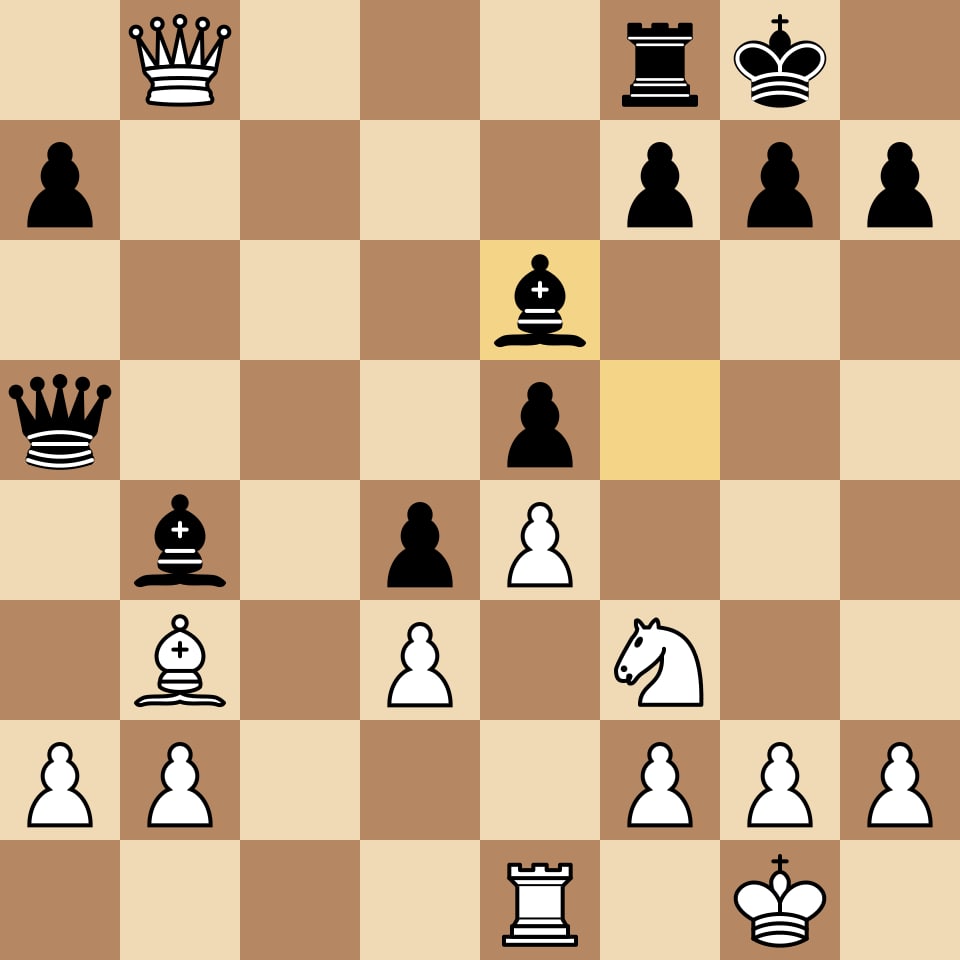
On October 17, 1956, Robert James Fischer, 13 years old, played a move in the Rosenwald Memorial Tournament in New York that Hans Kmoch called “a complete strategic masterpiece” in Chess Review magazine. He published the game under the title “The Game of the Century.” That was 1956. The name has held up.
Fischer played the Grünfeld Defense as Black against Donald Byrne, a strong American player who was giving the boy a knight-and-move advantage in informal games just a few years earlier. On move 17, Fischer played 17…Be6!!: a move that let Byrne take his queen on the next move. Fischer emerged from the sequence with a decisive material advantage and eventually won.
He was 13. He received a portable radio as the tournament prize.
The game
The opening is a Grünfeld Defense, arising after Fischer plays …g6, …Bg7, and …d5 in response to Byrne’s queen-pawn opening. On move 11, Byrne plays Bg5, a natural developing move that contains a positional error: it allows Fischer to play 11…Na4!, which attacks the queen and initiates a sequence of piece exchanges that leaves Black’s knight on c3: a dominant outpost.
The game is between Donald Byrne (White) and Bobby Fischer (Black). Watch for move 17: Fischer plays Be6!!, allowing his queen to be taken. Then a cascade of discovered checks by the knight recovers the material with interest.
Byrne White Fischer (age 13) Black


The move: 17…Be6!!
The double exclamation mark on 17…Be6 is unanimous among annotators. Byrne’s bishop on b6 is about to take Fischer’s queen. Fischer plays his bishop to e6 — a square that doesn’t block anything, doesn’t give check, and appears to accomplish nothing. And then Byrne takes the queen with 18.Bxb6.
After 18.Bxb6 Bxc4+ (the bishop discovers a check), the knight on c3 generates a series of discovered checks that Byrne’s king cannot escape: 19.Kg1 Ne2+ 20.Kf1 Nxd4+, picking up the queen, 21.Kg1 Ne2+ 22.Kf1 Nc3+ 23.Kg1 axb6. At this point, Fischer has won back the queen and has a rook, bishop, and knight against Byrne’s queen. The rest is a long technical conversion.
Move 41 is Rc2#, a back-rank checkmate delivered by the rook. Fischer played the combination perfectly and the endgame perfectly. He was 13 years old.
Why Kmoch called it the game of the century
Hans Kmoch was an Austrian grandmaster and chess writer who had seen the world’s best players compete for three decades. He had watched Alekhine, Capablanca, Botvinnik, Keres. When he saw the Byrne-Fischer game, he wrote: “In the history of chess, few games have received so much praise from experts as the one which young Robert Fischer played in this tournament. The surprise sacrifice, the remarkable series of checks and counter-checks, and the final simplification into a won ending were all far beyond what one might expect from a 13-year-old.”
The game was published, analyzed, and discussed. Fischer’s talent was already known in chess circles. The Rosenwald game made the scale of it visible outside those circles.
The connection to Fischer’s later career
Five years after the Rosenwald game, Fischer was the strongest player in the United States. Ten years after it, he was ranked among the top players in the world. In 1972, the year of the Reykjavik match against Spassky, he was the best player alive.
The same principles that produced the Game of the Century (piece coordination, tactical vision that runs deeper than opponents expect, willingness to let the material count go temporarily negative) appear in every phase of Fischer’s career. His annotations in My 60 Memorable Games demonstrate the same thinking applied to the Najdorf Sicilian fifteen years later.
Frank Brady’s biography Endgame (Crown, 2011) covers the Rosenwald tournament and places the game in the context of Fischer’s childhood and development in Brooklyn. It remains the most thoroughly researched account of Fischer’s life.
Frequently asked questions
What is the Game of the Century in chess? Byrne vs. Fischer, played October 17, 1956, in the Rosenwald Memorial Tournament in New York. Fischer was 13 years old and played Black. The game is named for the queen sacrifice on move 17 (17…Be6!!) that allowed Fischer to initiate a winning combination. Chess journalist Hans Kmoch named it in Chess Review magazine.
How old was Fischer when he played the Game of the Century? 13 years old. He was born March 9, 1943, and the game was played October 17, 1956.
What is the key move in the Game of the Century? 17…Be6!!, Fischer plays his bishop to e6, allowing Byrne to capture Fischer’s queen on the next move. After 18.Bxb6 Bxc4+, a series of discovered checks by the knight wins back the material with a decisive advantage.
What opening was played in the Game of the Century? The Grünfeld Defense, arising after 1.Nf3 Nf6 2.c4 g6 3.Nc3 Bg7 4.d4 0-0 5.Bf4 d5. Fischer’s fianchettoed bishop and active knight play created the tactical complications that led to the famous combination.
Sources
- Kmoch, Hans. “The Game of the Century.” Chess Review, 1956.
- Brady, Frank. Endgame: Bobby Fischer’s Remarkable Rise and Fall. Crown, 2011.
- Fischer vs. Byrne, 1956 game score, chessgames.com
- Game of the Century, Lichess study (PGN source)
This page contains affiliate links. As an Amazon Associate, DiscussChess earns from qualifying purchases.
Sources
- Kmoch, Hans. 'The Game of the Century.' Chess Review, 1956. (First use of the term.)
- Brady, Frank. Endgame: Bobby Fischer's Remarkable Rise and Fall. Crown, 2011.
- Fischer vs Byrne game score — chessgames.com
- Game of the Century — Lichess study (PGN source)
Further reading
- My 60 Memorable Games — Bobby Fischer, Batsford/Pavilion edition — ASIN verified via Open Library 2026-05-02. Fischer's own annotations of his Najdorf games, the same Fischer who played the Game of the Century five years before these games were played.
- Endgame: Bobby Fischer's Remarkable Rise and Fall — Frank Brady, Crown/Broadway, 2011 — ASIN verified via Open Library 2026-05-02. Brady covers the Rosenwald tournament and the Game of the Century in context of Fischer's early development.